Kite Festival at Zilker Park, Austin

Sunday March 4, 2012 (and first Sunday of March every year)  from 10 am to 5 pm is Kite Day at Zilker Park in Austin, Texas.

head1

Fun, Family Friendly and Free.

Free parking is available at :
1. the State parking lots at 1604 Colorado Street
2. South at the Toney Burger Activity Center at 3200 Jones Road

Round trip shuttle rides are $1 for persons 12 yrs and over, kids and dogs ride free. The first shuttle departs at 9:45 am and the last shuttle going to the park leaves at 3:00 pm. Shuttles will continue taking riders back to the parking lots until 5:30pm

Kite Fest Contests:
1. 50 yard dash (Kids only)
Competition is open to children between 7 and 12 years of age. Kites will fly on 50 feet of string. Kite string will be measured before the contest. Contestants will race to the finish line. Winner must have their kite stay in the air for the whole race.

2. Highest Angle Kite (Youth and Adult)
Competitors will release 200 feet of string and stand on a designated line. The kite flying at the highest angle overhead from the point of mooring wins the competition. For example, a kite flying directly over your head would win. Highest angle kite event has Youth and Adult categories. Kite line will be measured and marked between 11am and 1pm on the kite competiton field.

3. Steadiest Kite (with or without a tail) (Youth and Adult)
Winning kite is the least active kite in the air. Steadiest kite event has Youth and Adult categories.

4. Strongest Pulling Kite

5. Smallest Kite
Entries must fly on 25 feet of line and higher than the point of mooring. Kite line will be measured and marked between 11am and 1pm on the kite competiton field.

6. Most Unusual Kite (Youth and Adult)

7. Largest Kite
Square footage of the sail area will determine the largest kite. Kite Trains are not allowed. Kites must be capable of flying for one minute to qualify. Contestants are limited to three attempts in this event.

About Kite Fest:
The Zilker Park Kite Festival is one of Austin’s best-known annual events. Held on the first Sunday of March, it is the kick-off to the hundreds of springtime activities in Austin. The ‘Kite Tournament’ was created by The Exchange Club of Austin in 1929 with a mission to encourage creativity in children. Exchange Club President Ed St. John came up with the idea to give kids a constructive activity the community could participate in. It is the longest continuously running kite festival in the United States and is sponsored by the Exchange Club every year. The Zilker Park Kite Festival is an event anyone is welcome to attend (pets too!).

Check out more details at http://www.zilkerkitefestival.com

Kite-Festival-Austin-1Kite-Festival-Austin-2

Posted in Austin Fun | Tagged , , | Leave a comment

Diwali The Festival of Lights

The word “Diwali” is derived from the Sanskrit word “Deepavali” meaning  “row of lights”. While Diwali is popularly known as the “festival of lights”, the spiritual take is “the awareness of the inner light”. The celebration is “victory of diwali diya www.HennaArts.comgood over evil”. It refers to the light of higher knowledge dispelling all ignorance. On top of this, on main Diwali day, goddess of wealth, Lakshmi (Laxmi) is worshipped, hence this is festival where people show their richness and offer prayers to goddess Lakshmi to bring prosperity in their life.


The festival spans across five days and the preparation starts a month before. There are various stories behind celebration of Diwali. Some of the significant are:

  • According to Hindu Lunar calendar ‘New Year’ starts on this day.
  • Return of Rama to his kingdom after 14 years of long exile after killing demon-king Ravana. In joyous celebration of the return of their king, the people of Ayodhya, the Capital of Rama, illuminated the kingdom with earthen diyas and by bursting firecrackers.
  • Return of Pandavas after 12 years of Agyatvas (banishment to unknown place) during Mahabharat
  • Killing of demon Narakasura by Krishna or his wife Satyabhama


    When is Diwali celebrated

    Diwali falls on the one new moon night between mid-October and mid-November. According to Hindu calendar it’s new year eve.
    Since there is no moon rise this day and the darkness is all around, people lit their house with candles, lamps and beautiful decorative lights, symbolizing victory of lights over darkness.
    The date changes in the solar (Gregorian) calendar every year.
    This year (2011) Diwali is on 26-October.

    Importance of Diwali

    Unarguably Diwali is most famous and widely celebrated festival in Indian and is also popular in other countries like Nepal, Sri Lanka, Myanmar, Mauritius, Guyana, Trinidad & Tobago, Suriname, Malaysia, Singapore and Fiji.
    It spans all across diverse culture of India. It also coincides with harvest time in India. People splurge at this time of festival. Each corner of house is cleaned, white washed and decorated. The weather in India is pleasant at this time which supports five joyous day of festivity.
    The festival is predominated by colorful display of lights, bursting of crackers, cleanliness, sweets, lots of shopping, happiness.

    It is also important for business community. Some business do whole year worth of business just on this festival. In traditional way accounting year starts from this day. People save money all through year to enjoy this festival. It is also believed that gold, silver jewelry and new utensils should be bought during this time to have good fortune all year.

    Preparation and essential decorations for Diwali:

    Diya or Deep (from which the name of festival Deepavali ) is small container made our of earth/clay. It is fuelled with oil from coconuts, mustard or Ghee (clarified

    Diya decoration on Diwali Rows of Diya’s add to beautiful decoration on Diwali
    Hanging torans for Diwali decoration Lighted hangings for Diwali

    butter). The wick is made of cotton. Worship of goddess Lakshmi is done with the lit Diya and also hundreds of Diyas are places outside of the houese, on floors, balconies, doorways and in each room. In modern time this clay Diyas are being replaced by electric candle like lamps and also with various modern technical light shows.

    During Diwali festival, doorways are hung with torans of mango leaves and marigolds. There are designer Torans available now-a-days which are hung on the front door all year and replaced on Diwali day with new one.

    Hanging torans for Diwali decoration 

     Another beautiful addition to the fun of Diwali is sand art (Rangoli) applied in floor at the front of the house and inside.


    At Henna Arts we provide Rangoli services with design of your choice. Perfect for corporate events or for party on Bollywood or Moroccan theme.


    Five Days of Celebration
    It’s the best time of year in India. Kids get long break during this time. Festival this important does not end on one day.

    Day 1: Dhanteras or ‘Dhan Trayodashi’

    krishna Krishna killed demon on this day

    The first day of Diwali celebration is marked by Dhanteras. According to the legends, during the churning of ocean by the Gods and the demons, Dhanvantari – the physician of the Gods came out of the ocean on the day of Dhanteras, with a pot of amrita (nectar) that was meant for the welfare of the humankind. This day also marks the arrival of Goddess Lakshmi, which is celebrated by drawing small footprints of the deity, with rice flour and vermilion powder.

    This is the day when people buy new utensils and exchange leaves of specific plant symbolizing sharing wealth

    Day 2: Narak Chaturdashi (Chhoti Diwali)

    One famous story behind the celebrations of Diwali is about the demon king Narakasur, who was ruler of Pragjyotishpur, a province to the South of Nepal. During a war, he defeated Lord Indra and snatched away the magnificent earrings of Mother Goddess Aditi, who was not only the ruler of Suraloka, but also a relative of Lord Krishna’s wife – Satyabhama. Narakasur also imprisoned sixteen thousand daughters of Gods and saints in his harem. A day before Diwali, Lord Krishna killed Narakasur, released the jailed daughters and restored the precious earrings of Mother Goddess Aditi.

    As the name “Chhoti Diwali” where “chhoti” means small suggests, this day a scaled down version of Diwali is celebrated with less fan-fare.

    Day 3: Main Diwali (Legends of Ram)

    Ram kills the demon Ravana Ram returns to his kingdom on Diwali day after killing demon Ravana
    hindu goddess Lakhsmi Goddess of wealth Lakshmi is worshipped on Diwali day

    The most famous legend behind the celebrations of Diwali is about the prince of Ayodhya – Lord Shri Ram. According to the legend, the king of Lanka, Ravan, kidnapped Lord Ram’s wife (Sita) from the jungle, where they were staying as per the instructions of King Dashratha, father of Lord Ram. Then Ram attacked Lanka, killed Ravan and released Sita from the custody. He returned to Ayodhya with his wife Sita and younger brother Lakshamana after fourteen years.

    Therefore, the people of Ayodhyaa decorated their homes as well as Ayodhyaa, by lighting tiny diyas, in order to welcome their beloved prince Shri Ram and Devi Sita. It was the day of ‘Kartik Amavasyaa’ when they also celebrated the victory of Shri Ram over the King of Lanka, Ravan. Ram is considered the symbol of good and the positive things and Ravan represents the evils. Therefore, Diwali is considered the festival, which establishes the victory of good over the evil. On the night of Diwali, people light diyas, which is again an icon of positive energy to conquer darkness, the is symbol of negative energy.

    On this day, goddess Laxmi is worshipped with Ram and Ganesh. Diyas are arranged in special way in the puja place. Every community has it’s own way of worship. But everyone in the home wear new cloth for puja, distribute sweets and touch feet out of respect of elders and relatives. Kids enjoy with fire crackers in the road, in the front of house and even inside house ladies burn the lighting crackers. In India there is no restrictions (as yet) to burn fire crackers in the streets.
    (For Aarti of Lakshmi ji and puja methods downloads click here)

    Day 4: Govardhan Puja (Legends of Krishna)

    Krishna lifts the Govardhan mountain with one finger Krishna lifts the Govardhan mountain with one finger to save villagers from flooding rain

    ‘Govardhan’ is a small hillock situated at ‘Braj’, near Mathura. The legends in ‘Vishnu Puraan’ have it that the people of Gokul used to worship and offer prayers to Lord Indra for the rains, because they believed that it were He, who was responsible for rainfall for their welfare. However, Lord Krishna told them that it was Mount Govardhan (Govardhan Paevat) and not Lord Indra, who caused rains. Therefore, they should worship the former and not the latter.

    People did the same, which made Lord Indra so furious that the people of Gokul had to face heavy rainfall because of his anger. Lord Krishna came forward to ensure their security and after performing worship and offering prayers to Mount Govardhan, he lifted it as an umbrella, on the little finger of his right hand, so that everyone could take shelter under it. After this event, Lord Krishna was also known as Giridhari or Govardhandhari.
     
    Gudi Padwa:

    Some community celebrated this day as Gudi Padwa (New Year day by Maharashtrians). It is also known as Ugadi in Andhra Pradesh and Karnataka. This festival marks the beginning of the spring season .This festival symbolizes love and devotion between the wife and husband. On this day newly married daughters with their husbands are invited for special meals and given presents.

    Day 5: Bhai Dooj

    According to the legends, Lord Yamraj, the God of Death, visited his sister Yamuna on the ‘Shukla Paksha Dwitiya’ day in the Hindi month of ‘Kartik’. When Yamraj reached Yamuna’s home, she welcomed him by performing his aarti, applying ‘Tilak’ on his forehead and by putting a garland around his neck. Yamuna also cooked varieties of dishes, prepared many sweets for her brother and offered all those to Him.

    hindu goddess Lakhsmi Decoration of Golden Temple, India

    Lord Yamraj ate all those delicious dishes and when he was finished, he showered blessings on Yamuna and gave her a boon that if a brother visits his sister on this day, he would be blessed with health and wealth. This is why this day of Bhayya Duj is also known by the name of ‘Yam-Dwitiya’. Thus, it has become a tradition that on the day of Bhai-Dooj for the brothers to visit their sisters’ home and offer them gifts. Sisters also make various dishes for their brothers and give gifts to them.
     

    Diwali in USA & Austin

    Senate Resolution 299, recognizing the “religious and historical significance of the festival of Diwali,” passed unanimously on November 14, 2007 in the U.S. Senate.
    President Obama also celebrated Diwali on White House.
    This is just glimpse of what and how of Diwali. There is so much more. If you are planning to travel India. This is the best time to visit and see the color and brightness of life .
    In Austin, Diwali is celebrated on Austin Hindu Temple (9801 Decker Lake Rd, Austin, TX), Sri Sai Temple (
    2509 West New Hope Drive, Cedar Park, TX 78613) and at Radha Madhav Dham, 400 Barsana Rd. Austin, TX 78737


    Henna Arts wishes you very happy Diwali and prosperous new year


    (For Aarti of Lakshmi ji and puja methods downloads click here)

  • Posted in Diwali, Festivals of India, Indian Festival | Tagged , , , , , , , | 1 Comment

    Solah Shringar – Sixteen steps of bridal makeup in India

    What is “Solah Shringar”
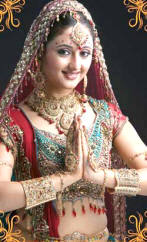
    Literally, ‘Solah’ means Sixteen (16) and ‘Shringar’ means makeup or adornments. ‘Solah Shringar’ encompasses sixteen basic steps of beautification of a woman from head to toe. It details the process and also includes the guidelines ondulhan makeup - solah shringaar makeup accessories and ornaments. Solah Shringar is a ritual, passed down through ancient culture and is meant to adorn  and bestow gifts of beauty on her.
    The Solah Shringar acknowledges and celebrates the beauty and divinity of the female form. There is a belief that certain ornaments and embellishments enhance the beauty of a woman giving her a celestial appearance. According to Hindu mythology “sixteen shringars” correspond to the sixteen phases of the moon which in turn is connected with a woman’s menstrual cycle. Solah Shringar is said to nullify the negative effect of that cycle.
    Word “Shringar” is made of ‘Shri’ which means “Lakshmi”, the goddess of wealth, beauty, luck and prosperity. It is generally related to Indian wedding which is one of the most significant and important day for a woman. It is the day that marks her transition into womanhood.
    In India, elderly people who do not know name of new bride, call them “Laskhmi”, so Lakshmi is common name of a bride who is considered to bring wealth and prosperity to the new family.
    Other than wedding, solah shringar is also carried over on major festivals and religious activities. In old days, solah shringar was done on queens when queen has to go to court for public appearances or when king is returning after long battle.

    Since there are so many ornaments and accessories, there is no definitive agreement on which sixteen are part of this ritual. I have include most prominent ones in the following sections based on my experience, various books and references:
    Pre–Shringar – The Divine Bath
    The ceremony starts with divine bath of bride. In this process, first bride’s hair is oiled with aromatic hair oil prevalent in India. Then hair is washed with mix of herbs like Brahmi, Shikakai, Aloe Vera, Bhringraj, Amla etc. A paste of oil, milk, turmeric powder, sandal wood powder, and gram flour and some fragrant herbs is applied in bride’s hands, arms, legs and face. This is organic face & body scrub in India, known as Ubtan. Applying this home made body scrub is usually accompanied with music and singing . The bride takes a proper bath to wash off these herbs and comes out with radiant, aromatic skin. Needless to say, in modern day brides have plenty of choices for the big occasion with the help of paid beauticians.

    Solah Shringar – Head to Toe

    1. Keshapasharachana – Kesh (hair) .pash (flock) .rachna (arrangement)
    Indian bride hair style GajraAfter the bath, hair is dried and twined according to the latest style, wedding dress and in some parts of country according to tradition. Bride’s hair is styled and adorned with flowers and jewelry. In some religion brides have to have their hair completely down because the myth says a woman can enchant a man with her hair. During the wedding it is therefore respectful keep it to tied up. Main jewelry and accentuations for hair:
    1a. Gajra:
    Gajra is strings of flowers . It is made usually of jasmine and worn both on the bun and with the braid coiling.
    2. Mang-Tikka (mang-teeka) or Bhor, borla or Mang-patti
    Generally made of gold, silver and precious stones, Mang-tikka is worn in the center parting of the hair and it comes till fore head. The other type of Mang-tikka also have chain which is tied along the hairline of the hair. The allure of the bride is highlighted by this ornament. Mandoria is other regional hair ornaments which consists of a strand of pearls, tied across the forehead on either side and can usually be seen on a Maharashtrian bride.

    3. Sindoor (vermillion) Indian bride - sindoor - the symbol of suhag

    Sindoor is a red colored powder that is applied on the center parting of a bride hair. This is one of the sacred  symbol of married woman (Suhaag) in India, just like ring in western countries. Girls do not put Sindoor before marriage. For the first time groom puts vermillion on bride’s head during wedding rituals. In some Hindu culture it is mandatory to have Sindoor on married woman’s head all the time.

    4. Bindi or tikka or tilak

    dulhan makeup - mang tikka, naath, Mangal SutraThe Bindi has a strong religious implication and is a sacred symbol of a married woman. Traditionally, it is the circular red dot of vermillion powder placed on the center of the forehead but brides may also decorate the bindi with red and white dots around the forehead and along the eyebrows. The bindi symbolizes dedication towards her husband or the resolve to the marital relationship.
    5. Anjana or Kajal
    Kajal is black eyeliner that is meant to highlight and accentuate a bride’s beautiful eyes. Kajal was traditionally prepared from the soot of diya (earthen lamp) lit with a wick placed in clarified butter. Today many girls use a strong black pencil eyeliner to achieve the kohl look.
    6. Nose Ring (Nath):
    Nose ring is by far one of the most traditional and ethnic Indian looks. A nose ring consisting of clusters of pearls or other gems including diamonds is worn on the left nostril. In some areas of India the nose ring is never removed and thus, becomes another visible sign of a married woman. For special ceremonies and worships special nose rings is worn with a chain, which extends behind left ear.
    7. Ear Ring, Karn Phool or Jhoomars
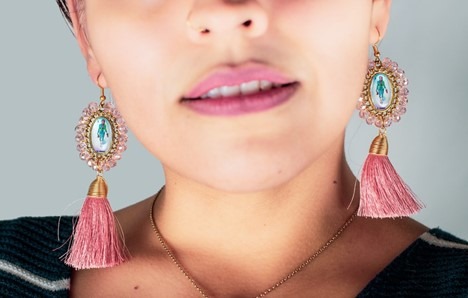
    Ear rings may consist of elaborately decorated large round ornaments. The weight of these ornaments is often supported by a chain passing over the crown of the head. Some earrings hang from the lobe and end in a large elaborately decorated pendant. Other ornaments cover the entire ear.
    8. Necklace, Haar, Mangal Sutra
    Necklaces of different lengths, some arranged like a collar or choker, are strung with pearls, armband designs for indian bridegold pieces, and gold beads. Necklaces made from floral garlands are also worn by the bride. The most traditional haar is the mangalsutra, given by the husband on the wedding day. It is made of black beads.
    9. Armbends, Baaju-band or Armlets
    Armlets worn on the upper arm, may be set with pearls or diamonds and made of gold or  silver. The Mughal, Rajasthani or Jaipuri are the most popular designs of baajuband.
    10. Choodiyan, Bangles, Bracelets
    Because they are considered the most visible sign of marriage, bangles or bracelets are another most important adornments worn by the bride. Bangles may be made of iron, ivory, green or red glass, ceramic, gold, and other metals depending upon dulhan menhndi designs and indian banglesthe custom. Sikh and Punjabi brides add Kaleeras to the bangle set. It is said a new bride should not be cooking and cleaning in the husband’s house when she first moves in, that is why she has all the bangles and kalira on.
    11. Mehndi or Henna
    The hands and feet are covered with intricate mehndi designs made from henna. The resulting red color is considered to be auspicious because it has several emotional, sexual and fertility-related qualities. Henna signifies the essence of love and applied on the hands and feet of the bride, to strengthen that bond of love. Henna parties for the bride are one of the most special pre-wedding rituals today.  More details at www.HennaArts.com

    12. Rings and Hathphool (Flower of hand) 

    A bride wears eight rings in both her hands, which are attached with a central flower or medallion that covers thebride hathphool with rings and bracelets upper part of the hand called Hathphool.  Of Hathphool, three of the chains pass to a bracelet and five to each of the fingers where they are secured by finger rings. In some cases, the left hand thumb ring may contain a mirror, known as Aarsi.
    13. Aarsi
    Aarsi is the thumb ring which the bride wears. It mostly has mirror embedded on it and enable the bride to have a glimpse of herself as well as her life-partner because during wedding rituals bride has a veil and can not see face of her to be life partner.
    14. Waistband – Kamarband or Kardhani
    Kamarband is a beautifully designed gold or silver belt worn around the waist of the bride studded mostly with beautiful gems. The belt not just enhances the waist area but also helps in holding the Sari or Dress in place.

    dulhan anklet, payal, toe-ring and bichua

    15. Anklets or Payal

    A chain of silver with an edging comprising clusters of small bells attached is traditionally worn on both feet which make a pleasant sound as the feet of bride moves.

    16. Toe Ring or Bichuas

    Toe rings may be simple or elaborate in design. Some toe rings have bells attached to them. Foot and toe ornaments may be constructed in a manner similar to the hathphul described above. Toe ring is mostly worn on the second toe of the left feet. The toe ring is also a symbol of marriage and is worn till the husband’s death.
    16a. Mahur
    Mahur is a type of red color ink made out of some plants. In some regions a thick red line is drawn along the outer border of the foot. Mostly in Bengal and some tribal areas Mahur is used to decorate the feet.

    Finally some words on Bridal Dress, Significance of Gold and Red color
    The indian bridal dress maybe a sari or ghaghra-choli, Lehenga and come in a variety of colors: red, green, marigold, red/white and styles, navari, panetar, patani that represent the bride’s heritage. Red is considered auspicious color. So, red is the color of the bride’s wedding dress. The sari may also be richly embroidered with gold threads. Gold ensures ceremonial purity and precious stones are set into gold ornaments that adorn specific parts of the body.

    We sell and rent Indian bridal jewelry and latest fashion dresses. Checkout www.HennaArts.com or Contact us for details.

    latest design of Indian bridal jewelrylatest fashion jewelry for indian woman

    Posted in Delhan makeup, Dulhan Mehndi, Indian marriage, Indian wedding | Tagged , , , , , , , , , , , , , , , , , , , , , , , , , | 3 Comments